
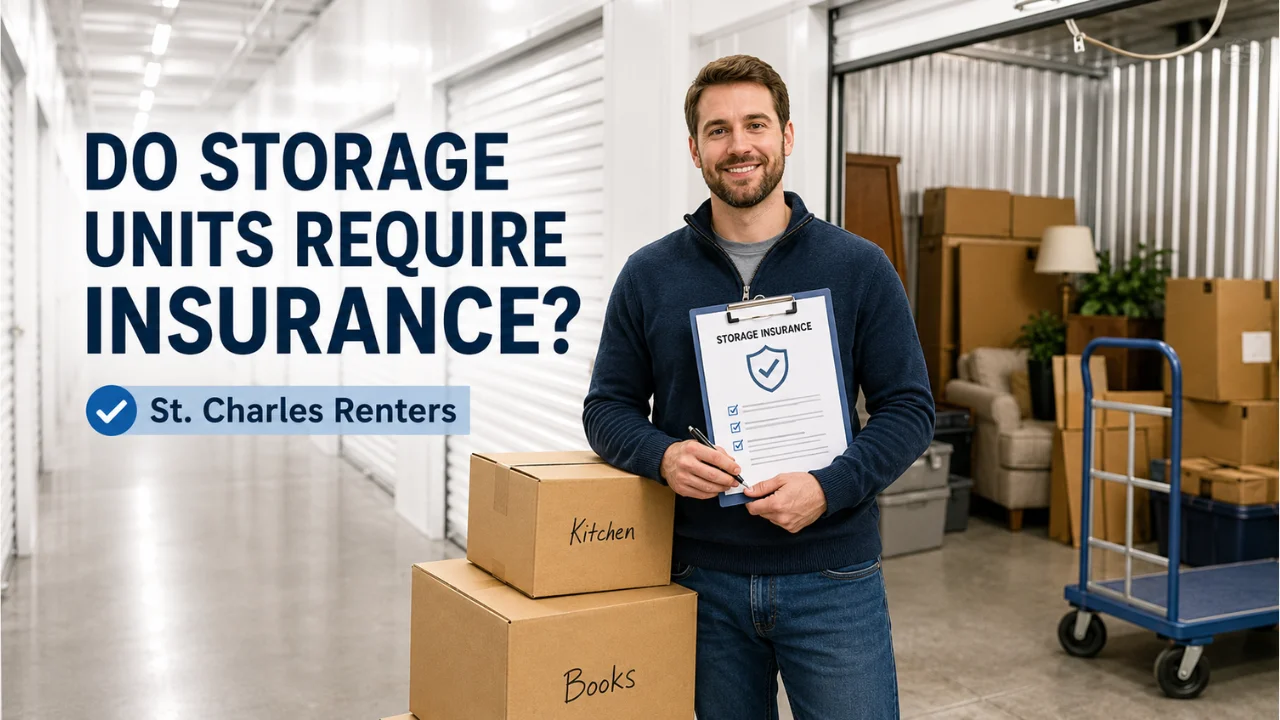
Do All Storage Units Require Insurance? What St. Charles Renters Should Know
If you plan to rent a storage unit in St. Charles, you may ask: Do all storage units require insurance? Some facilities require proof of insurance before move-in. Some accept renters or homeowners insurance. Others offer a tenant protection plan.
For St. Charles renters and Lindenwood University students, this matters because stored items are usually your responsibility. A secure, climate-controlled unit protects belongings from heat, cold, and humidity, while insurance adds financial protection if a covered loss happens.
Do All Storage Units Require Insurance?
No, not all storage units require insurance. The rule depends on the facility and rental agreement. Many facilities ask for proof of coverage, while others strongly recommend it.
Coverage may come from renters insurance, homeowners insurance, tenant insurance, or a storage protection plan.
Why do storage facilities ask for Insurance?
Storage facilities ask for insurance because even secure storage has risks. Cameras, keypad entry, lighting, and indoor units reduce risk, but they do not replace coverage for your personal property.
Insurance may cover theft, fire, smoke damage, vandalism, storm damage, and some water damage.
Is Storage Unit Insurance Required in St. Charles, MO?
It depends on the facility’s rental agreement.
Storage insurance requirements in St. Charles can vary by facility. The rental agreement usually explains whether insurance is required, what proof is accepted, and whether there is a minimum coverage amount.
Before signing, ask if insurance is required, if your current policy is accepted, if proof is needed, and if tenant protection is available.
Why local renters should ask before move-in day?
Local renters often need storage during moves, downsizing, renovation, garage cleanouts, or college breaks.
Lindenwood University students may need storage during dorm move-out, semester changes, study abroad, or apartment moves. Asking early keeps the rental process simple.

What Does Storage Unit Insurance Usually Cover?
Common covered situations
Storage unit insurance usually covers sudden loss or damage listed in the policy, such as theft, fire, smoke, vandalism, lightning, wind damage, and some water damage.
What may not be covered?
Storage insurance does not cover every problem. Common exclusions may include flooding, mold, pests, poor packing, normal wear, items above the policy limit, and items stored against facility rules.
If you plan to store electronics, artwork, documents, collectibles, or business equipment, ask whether added coverage is needed.

Can Renters or Homeowners Insurance Cover a Storage Unit?
Your current policy may already include off-premises coverage
Your renters or homeowners insurance may cover belongings stored away from your home or apartment. This is often called off-premises personal property coverage.
The limit may be lower than your regular home coverage, so check the coverage amount, deductible, exclusions, and proof requirements.
Why should students check family insurance first?
Lindenwood University students may have protection through a parent or guardian’s homeowners policy, but this is not guaranteed.
Students should check coverage before storing bedding, clothes, books, mini fridges, appliances, monitors, sports gear, and dorm decor.
Ask these questions before relying on your current policy
Ask your insurance provider:
- Does my policy cover storage units?
- What is the coverage limit?
- Does it cover theft and fire?
- Are electronics included?
- Can I get proof of insurance?

Why Insurance Matters More for Climate-Controlled Storage?
Climate control protects items, but it is not insurance
Climate controlled storage protects items from temperature swings and humidity. This is a strong benefit in Missouri, where summer humidity and winter cold can affect stored belongings.
Still, climate control is not insurance. Climate control protects the storage environment. Insurance protects your money if a covered loss happens.
Items that may need extra protection
Climate-controlled storage is a smart fit for furniture, mattresses, electronics, photos, documents, clothing, books, artwork, business files, and dorm supplies.
Local angle: St. Charles weather and humidity
St. Charles weather can shift throughout the year. Humid summers, cold winters, and seasonal storms can affect furniture, paper items, fabrics, and electronics.
Many local renters choose climate-controlled storage for household goods, student items, files, and business supplies. Fountain Lakes Storage gives renters a clean indoor option near St. Charles and Lindenwood University.

Storage Unit Insurance for Lindenwood University Students?
Do college students need insurance for storage units?
College students may need insurance if the facility requires it or if stored items would cost money to replace. It can be a smart choice for electronics, furniture, clothes, books, and appliances.
What do students usually store?
Lindenwood students often store bedding, clothes, textbooks, mini fridges, microwaves, desks, computer screens, sports gear, kitchen supplies, and dorm decorations.
Climate-controlled storage keeps these items in a stable indoor space until the next semester starts.
Why is nearby storage convenient?
Nearby storage can save time, fuel, and stress. Instead of taking everything home, students can store items close to campus and pick them up when classes resume.
Fountain Lakes Storage is a strong local option for climate-controlled storage near Lindenwood University and St. Charles.

Storage Insurance for St. Charles Apartment Renters and Homeowners
When moving between apartments
If you are moving between apartments in St. Charles, your items may sit in storage for days, weeks, or months. Insurance can provide coverage during that gap.
This can happen when lease dates do not match, you are downsizing, renovating, waiting for closing, or moving in stages.
When storing valuable household items
Many renters and homeowners use storage for sofas, tables, mattresses, seasonal decor, family photos, clothing, appliances, files, tools, and keepsakes.
When business storage may need added coverage
Small business owners in St. Charles may use storage for inventory, supplies, displays, documents, tools, and marketing materials.
Business items may not be covered under a personal policy. Ask your insurance provider about business coverage before move-in.
How Much Does Storage Unit Insurance Cost?
Cost depends on coverage amount
Storage insurance cost depends on item value, coverage limit, deductible, and provider. A student storing dorm items may need less coverage than a homeowner storing furniture and electronics.
Do not choose only by price
A low-cost plan may not cover enough if your belongings are worth more than the policy limit.
Before choosing coverage, ask about maximum payout, deductible, exclusions, electronics coverage, high-value item limits, and whether coverage can be changed later.
What Happens If You Rent a Storage Unit Without Insurance?
You may not be allowed to rent at some facilities
Some facilities may not allow move-in without proof of insurance or a tenant protection plan. Others may allow rental but state that your belongings are your responsibility.
Ask about insurance before arriving with a moving truck.
You may be responsible for your own belongings
If you rent without insurance and something happens, you may have to replace damaged or missing items yourself.
Facility security can reduce risk, but insurance adds financial protection. Climate-controlled storage, secure access, cameras, and good packing all work together.
What to Ask Before Renting a Storage Unit in St. Charles?
Storage insurance checklist
Before renting, ask:
- Is insurance required?
- Can I use renters insurance?
- Can I use homeowners insurance?
- Do I need proof before move-in?
- What coverage amount is required?
- Are student items covered?
- Are business items covered?
- What damage is excluded?
- Does the facility offer protection plans?
Why is Fountain Lakes Storage a local option?
If you need storage near St. Charles or Lindenwood University, Fountain Lakes Storage gives renters a clean, local, climate-controlled option for personal, student, and business storage.
You get climate-controlled storage, ground-floor units, secure access, 24/7 video security, local access near St. Charles, and a convenient option near Lindenwood University.
Climate-controlled storage is a smart choice for furniture, documents, electronics, clothing, dorm items, books, and household goods.
Need storage near St. Charles or Lindenwood University?
Choose a climate controlled unit at Fountain Lakes Storage and ask about insurance requirements before move-in.
- View Climate Controlled Units
- Rent Storage Near Lindenwood University
- Check Storage Unit Sizes
Frequently Asked Questions (FAQs)
Q1. Can I use renters insurance for a storage unit?
Yes, if your policy covers off-site belongings.
Q2. What items should I insure in a storage unit?
Check coverage for furniture, electronics, clothing, books, appliances, documents, business items, and dorm supplies.
Q3. Does climate-controlled storage replace insurance?
No. Climate-controlled storage protects the unit environment. Insurance protects your money after a covered loss.
Q4. What should Lindenwood students ask before renting storage?
Students should ask about insurance, unit sizes, climate control, access, move-in rules, and proof of coverage.
Conclusion
Storage unit insurance requirements can vary from one facility to another, so renters should always check the rental agreement before move-in. For St. Charles residents and Lindenwood University students, insurance can add financial protection for belongings stored during moves, college breaks, apartment changes, or long-term storage needs. Climate-controlled storage can help protect items from temperature swings and humidity, but it does not replace insurance coverage. Before renting a unit, it is better to review your current renters or homeowners policy, ask about coverage limits, and confirm what proof may be needed.


